


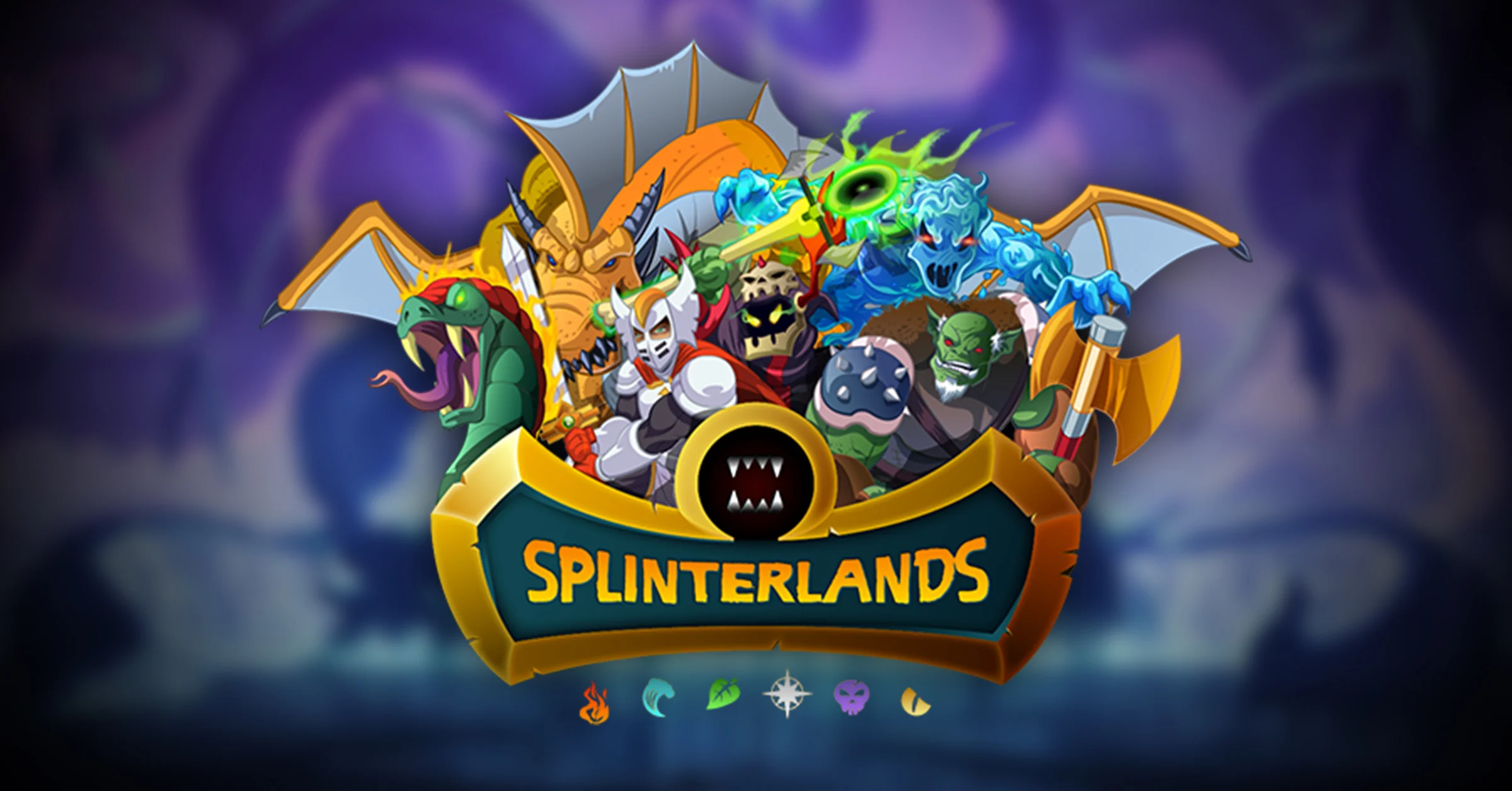
Do you dream of commanding fearsome monsters in magical combat? How about owning those monster cards, not just in-game, but as real digital assets you can trade or sell? If that sounds intriguing, Splinterlands could be the digital battlefield for you!
It’s a leading name in the blockchain gaming space, merging strategic collectible card game mechanics, a popular genre within trading card games, with the concept of true digital ownership through NFTs.
Splinterlands: Key Takeaways
- True card ownership: Splinterlands utilizes NFT technology, meaning each card is a unique digital asset players genuinely own, enabling trading, selling, renting, and leveling up.
- Strategic auto-battler: The gameplay focuses on pre-battle strategy – selecting a Summoner and Monsters based on mana limits and battle rulesets – with battles playing out automatically.
- Play-to-Earn ecosystem: The game features a dual-token economy, DEC and SPS, and multiple ways to earn rewards through ranked play, tournaments, quests, plus asset management like renting or selling.
- Multiple game modes: Splinterlands offers diverse experiences including Ranked Battles in Modern, Wild, and Survival formats, player-run and official Tournaments, and team-based Guild Brawls.
- Constant evolution: Backed by an active development team and community governance via the SPS token, the game receives regular updates, new card sets, and feature improvements.


What’s Splinterlands all about?
Splinterlands launched back in 2018, originally under the name Steem Monsters. It emerged from the developers’ desire to fix a common frustration in digital card games past: players couldn’t truly own their cards.
Built on blockchain technology, and primarily using the Hive blockchain, Splinterlands makes every card a Non-Fungible Token or NFT.
This means players really own their cards. You can battle with them, hold them as collectibles, trade them on marketplaces, rent them out to other players for income, combine duplicates to make them stronger, or even “burn” them for in-game currency.
It’s a system designed around player ownership and a potential “Play-to-Earn” model, where strategic gameplay and smart collection management can yield fantastic value, a trend seen across the industry with brands like Azuki announcing plans for Trading Card Games.
Inspired by classics like Magic: The Gathering but unique in its rules, Splinterlands offers fast-paced matches, typically lasting only 2-3 minutes, available on web browsers and mobile devices. This accessibility is similar to how other titles like the NFL Rivals mobile game blend accessibility with strategic depth.
Splinterlands has become something of a cornerstone of Web3 gaming, boasting thousands of daily players and millions of battles fought, driven by founders aiming to innovate much like others in the space have, such as Mythical Games, the studio putting blockchain into play.

How do I get started in Splinterlands?
Jumping into Splinterlands is simple.
Head over to the official website, Splinterlands.com, and create an account. You can use just an email address to start. If you’re already into crypto, you can also log in using a Web3 wallet like MetaMask.
You begin with a set of “Starter Cards,” currently drawn from the Chaos Legion set. These let you play for free, learn the basics in modes like Training, and earn a currency called Glint.
However, the real mechanics of Splinterlands, such as earning the main currencies, DEC and SPS, entering tournaments, selling cards, and getting better rewards, require the Summoner’s Spellbook.
The Spellbook is a kind of premium account unlock. It’s a one-time purchase, costing around $10 USD, which can be paid via PayPal or various cryptocurrencies. Buying it grants you full access to the Play-to-Earn features, gives you some starting Credits for buying or renting cards, creates your unique Hive blockchain account for asset management, and unlocks daily quests and seasonal rewards.
While you can play for free, the Spellbook is pretty much essential if you want to seriously engage with the game’s economy and competitive aspects.

What’s Splinterlands gameplay like?
Splinterlands battles are all about strategy before the fight begins. It’s an “auto-battler,” meaning once you set your team, the combat unfolds automatically based on your setup. Here’s the flow:
- Know the rules: Before picking cards, you’ll see the Mana Cap, which limits how much total mana your team can cost, and any active Rulesets. These rulesets are special conditions, such as allowing only Melee monsters or causing all monsters to start poisoned. Adapting to these is key!
- Choose your leader: You pick one Summoner card. This card determines the elements, such as Fire, Water, Earth, Life, Death, Dragon, or Neutral, of Monsters you can use and often provides buffs, like +1 Melee attack, or debuffs to enemies. Dragon Summoners let you mix Dragon units with another element, offering flexibility.
- Assemble your team: Select up to six Monster cards that fit the Mana Cap and match your Summoner’s element. Positioning is critical! Tanks usually go upfront. Ranged attackers typically need to be in the back. Magic attackers can hit from anywhere and bypass armor.
- Watch the mayhem: Once both players submit their teams, the battle automatically plays out. Turn order depends mainly on Speed stats. Abilities trigger, attacks fly, and a winner emerges based on the cards, placement, and stats. You can watch the replay to see what went right or wrong. Success depends on smart team building for the current conditions.

What makes the cards special?
Understanding your card features really is key to success. Beyond the basics:
- Stats: Mana Cost, Attack, which can be Melee, Ranged, or Magic, Speed, Armor, and Health define a card’s battlefield role.
- Rarity: Common, Rare, Epic, and Legendary. Rarity impacts a card’s power, how hard it is to find, which affects its market price, and how many copies you need to combine, or “level up,” to boost its stats and unlock abilities.
- Abilities: This is where deep strategy lies. Abilities like Heal for restoring health, Blast for splash damage, Sneak for targeting the backline, Flying for increased evasion, or Thorns for reflecting melee damage can completely change a battle’s outcome.
- NFT nature: Remember, these cards are NFTs. This gives them value beyond just gameplay as unique digital collectibles. You can buy, sell, trade, and rent them. Leveling up cards increases their stats and often their market value.
How does the economy work in Splinterlands?
Splinterlands has a buzzing economy powered by NFTs and two main tokens, all running on the Hive blockchain, a different approach compared to games using other infrastructures, such as when Gods Unchained migrated to Immutable zkEVM:
- Dark Energy Crystals, or DEC: The main in-game currency. Earned primarily by winning ranked battles, completing daily quests, selling or burning cards, renting cards out, or winning tournaments. Used to buy or rent cards, purchase packs, potions which improve card drop chances, upgrade guild buildings, and more.
- Splintershards, or SPS: The governance token. Earned from ranked wins, Guild Brawls, staking SPS, or providing liquidity. Holding and staking SPS gives you voting power in the game’s future development through a DAO, and is often required to maximize your earnings from other activities. It has utility in tournaments, node licenses, and other areas.
The ability to rent cards is massive. Don’t own that powerful Legendary? Rent it for a day or a season! Alternatively, rent out the cards you aren’t using for passive DEC income.

What are the different ways to play?
Beyond just battling, Splinterlands offers variety within the exciting world of NFT gaming:
- Ranked Battles: The main ladder system. Climb leagues ranging from Novice to Champion for better rewards. Choose your format:
- Modern: Uses only the latest card sets. Great for newer players as the card pool is smaller. Free to play.
- Wild: Uses all cards ever released. More complex, requires a seasonal pass, often favored by veterans with older collections.
- Survival: The newest mode. Like Wild, but defeated cards go on cooldown.
- Tournaments: Compete for prizes! Various formats like single elimination or timed rounds, entry fees, and rules. Some are official “Open” tournaments providing everyone the same cards, focusing purely on skill.
- Guild Brawls: Join a guild and battle other guilds in large-scale events. Earn exclusive rewards like Merits, which are used to buy Gladius packs containing unique, powerful cards, and SPS. Fosters teamwork and strategy.
How can I build a winning team in Splinterlands?
Strategy is king! Here are some starting points:
- Analyze the rules: Always check the Mana Cap and Rulesets first. A low mana cap requires efficient, low-cost monsters. A “No Magic” rule means Ranged and Melee reign supreme.
- Summoner choice: Pick a Summoner whose buffs or debuffs complement your strategy and counter the likely opponent or ruleset.
- Balanced roles: Include a sturdy “tank” in the front, damage dealers using Magic, Ranged, or Melee attacks often enhanced with abilities like Sneak or Opportunity, and potentially support units providing Heal or Armor Repair.
- Synergy > Raw Power: A team with abilities that work well together often beats a team of individually strong but disconnected cards. Experiment! Look for combos like Martyr plus Damage Dealer or Tank Heal plus Tank.
- Adapt and learn: Don’t use the same team every time. Check your opponent’s recent battles, which the game allows you to see. Learn which strategies beat yours and adjust.

Is there an active Splinterlands community?
Absolutely! Splinterlands thrives on its dedicated player base, a key element of any successful NFT community.
- Discord: The main hub. Find help, strategy discussion, announcements, and connect directly with devs and players.
- Hive Blog / PeakD: Includes official announcements and tons of player-written guides and analyses.
- Reddit, specifically the r/Splinterlands subreddit: A forum for discussion, questions, and sharing.
- Twitter, now known as X, Telegram, Splintertalk.io: Other platforms for news and community content.
Engaging with the community is a great way to learn faster, discover strategies, understand market trends, and find guilds.
What’s new and what’s next for Splinterlands?
The Splinterlands team is always adding updates, much like other active developers such as the Gunzilla Games blockchain gaming studio.
Recent changes improved new player experience by making earning easier with Glint and providing simpler starter cards, added Survival Mode, revamped Training, and rolled out Land gameplay features.
Looking ahead, the roadmap includes things like guild alliances, cosmetic skins, and further Land development. The focus remains on improving gameplay, balancing the economy, and expanding the Splinterlands universe.

Is Splinterlands worth playing?
Splinterlands does a great job blending the strategic depth of a CCG with blockchain and NFTs. Its core strengths are the asset ownership, engaging and fast automated battles that put strategy first, an extensive economy, and continuous updates.
However, it’s not without its challenges.
There’s definitely a learning curve, as understanding all the card abilities and market nuances takes time. Also, while “Play-to-Earn” is possible, making any meaningful earnings often require strategic skill, time investment, and potentially some initial capital, for the Spellbook and to build a competitive collection. The economy can fluctuate, and like many online games, dealing with bots is an ongoing effort.
Overall, if you enjoy strategy card games, collecting, and the idea that your time and skill can build a collection with real-world value, Splinterlands offers a pretty deep and rewarding experience. It’s a great example of Web3 gaming making the most of its technology, providing a rich world for aspiring Battle Mages to explore and conquer!


Riding crypto waves since 2012, bridging digital and physical worlds through prose.